Steriotriqs
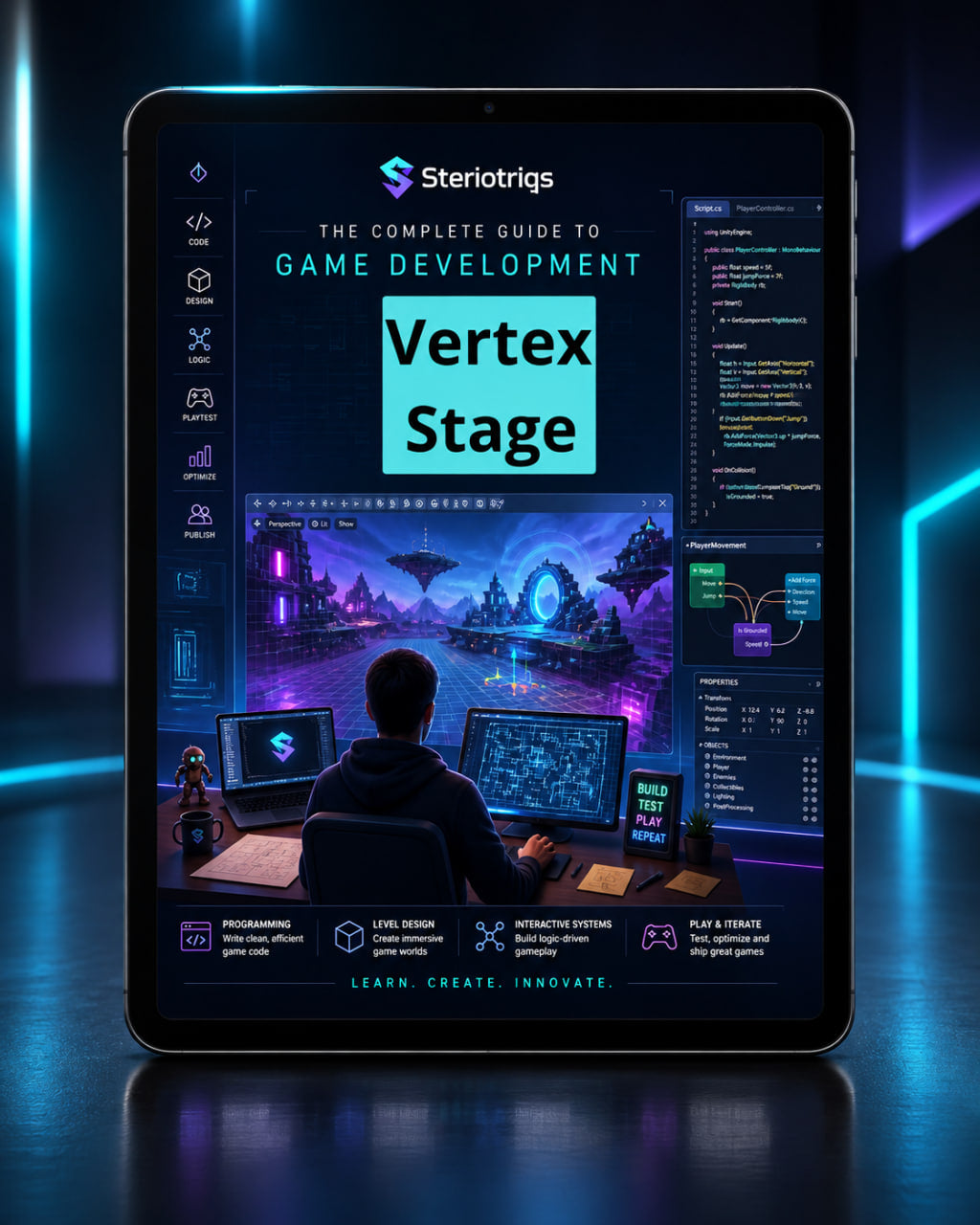
Vertex Stage
Vertex Stage
Couldn't load pickup availability
1. Problem Statement
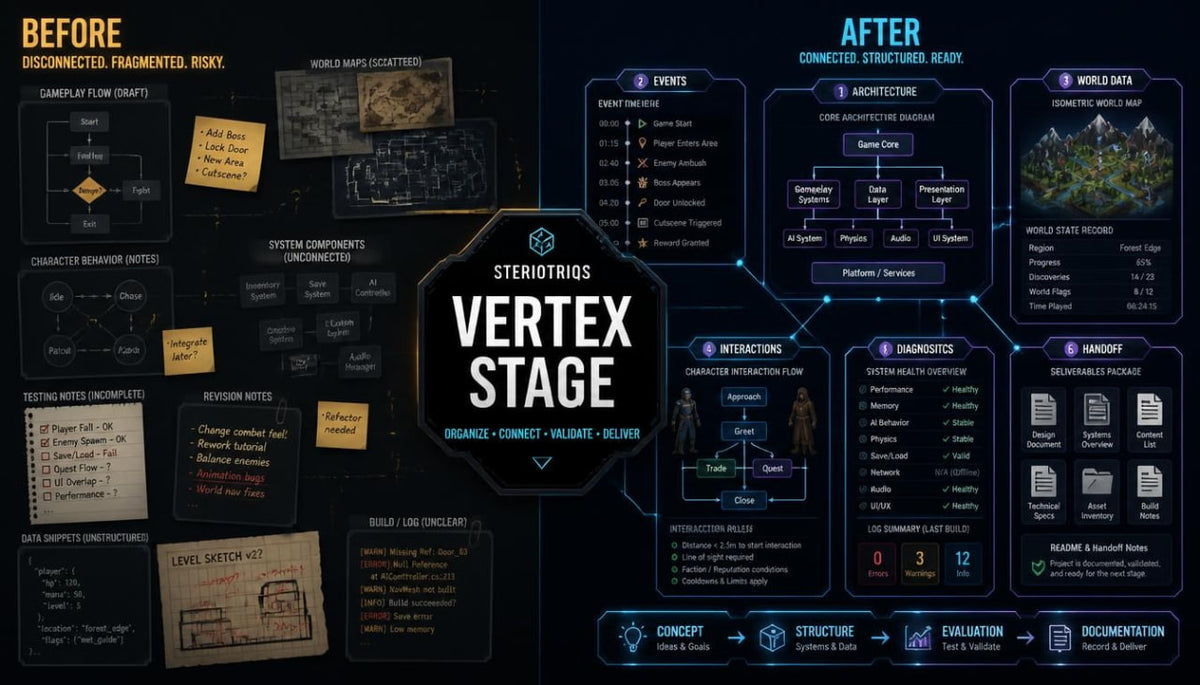
Complex game projects require different systems to operate within one structure. Interaction rules, world states, character behaviors, and simulation processes can create dependencies. Changes to one component may produce unexpected behavior elsewhere in the environment. Without clear testing and documentation, identifying these relationships becomes increasingly difficult. A coordinated approach is therefore valuable when moving from separate gameplay concepts toward project planning.
2. Solution
Vertex Stage presents methods for combining interconnected game systems into a documented architectural model. The course explores component boundaries, event coordination, data consistency, and technical evaluation. Fictional scenarios illustrate change planning and interaction investigations. Guided activities involve creating system maps, test plans, revision records, and handoff documents. A concluding studio connects the material through a comprehensive game development design dossier.
3. What's Inside
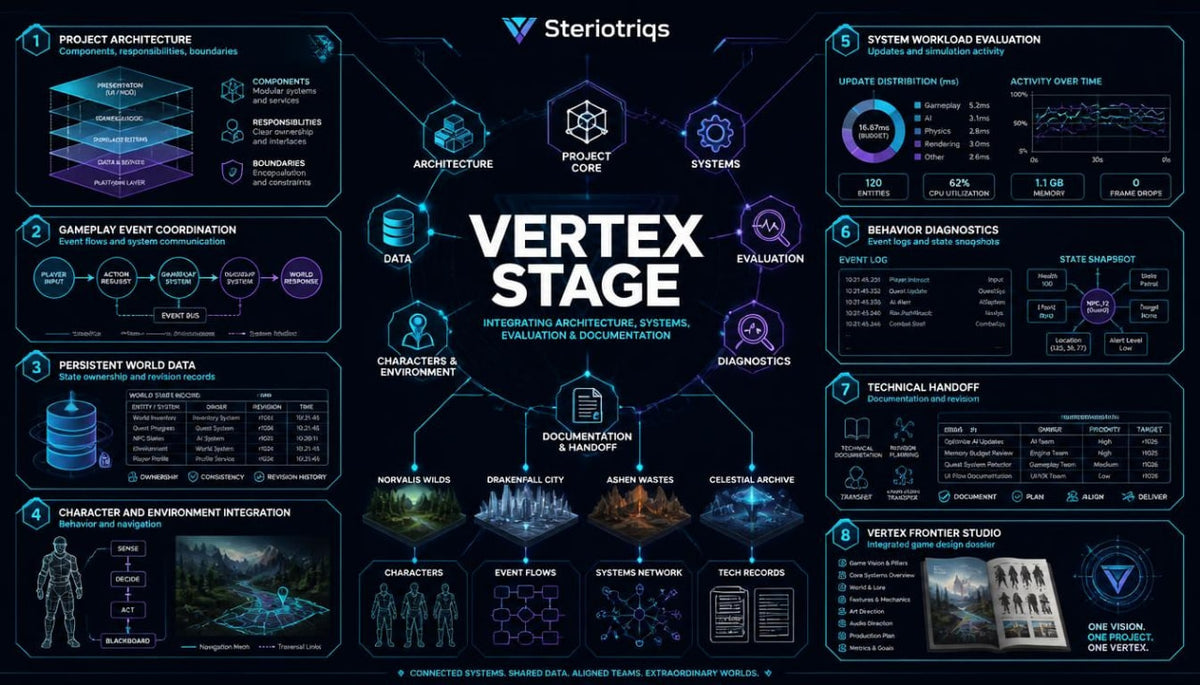
Module 1 — Defining the Project Architecture
Examine system responsibilities, technical boundaries, and communication paths. Create a component map showing how gameplay mechanics, world data, and player interactions relate to one another.
Module 2 — Coordinating Gameplay Events
Study event ordering, shared triggers, and interactions across systems. Document event flows that cover repeated inputs, interrupted sequences, and conflicting conditions.
Module 3 — Managing Persistent World Data
Explore ownership of gameplay states, revision records, and changing environmental conditions. Prepare a state model describing how information is updated and reviewed across connected locations.
Module 4 — Integrating Characters and Environments
Investigate relationships between character decisions, navigation routes, object interactions, and simulation events. Design a scenario where behaviors respond to changes across several regions.
Module 5 — Evaluating System Workload
Examine update schedules, active regions, and competing computational tasks. Compare approaches for distributing simulation activity and compare detail, responsiveness, and complexity.
Module 6 — Diagnosing Unexpected Behavior
Study event logs, state snapshots, and reproducible test cases. Practice tracing an interaction issue from its visible symptom to the rule or dependency that requires further investigation.
Module 7 — Revision Planning and Technical Handoff
Explore change records, component inventories, testing notes, and documentation structures. Prepare a handoff checklist that separates design decisions from open questions and future tasks.
Module 8 — Applied Studio: The Vertex Frontier
Develop an integrated design dossier for a fictional exploration game featuring connected environments, responsive characters, dynamic resources, and branching objectives. Assemble architecture diagrams, interaction rules, state records, diagnostic scenarios, and an evaluation checklist.
4. Who Is This For?
Vertex Stage is intended for learners familiar with game mechanics, interconnected environments, and system design.
It suits those interested in architectural planning, technical evaluation, and organizing complex game concepts.
The focus is written design and analysis, not delivery of a finished playable game.
5. What You'll Learn
- Map component responsibilities and dependencies.
- Document coordinated gameplay events.
- Describe persistent state management.
- Plan interactions between characters and environments.
- Examine simulation workload tradeoffs.
- Trace conflicting behavior through diagnostic records.
- Prepare testing and revision documentation.
- Assemble an integrated game design dossier.
6. 14-Day Refund Policy
Customers may submit a refund request within 14 days of purchasing Vertex Stage, subject to the Steriotriqs Refund Policy and applicable consumer rights.
Requests can be sent through our contact channel with the relevant order details. Our team will review the request under the published policy.
Share